Textbook on financial derivatives

- Title
- Financial Derivatives
- Subtitle
- Basic Principles of Pricing and Valuation – Forward Contracts –
- Author
- Matthias Scholz
Availability
The book is available on Amazon.com and Lulu.com.
Description
This book provides a systematic introduction to the pricing and valuation of:
Forward Contracts
The book is written for first-time readers, especially finance undergraduate students. Explanations focus on the essential concepts, avoiding deep theoretical discussions. Each chapter follows a consistent structure:
- Financial terminology is clearly defined.
- Pricing and valuation concepts are explained concisely.
- Practical examples illustrate the concepts to encourage active learning.
Diagrams and illustrations support the conceptual explanations and help interpret the calculations and data. The writing style is designed to be clear to ensure that concepts can be quickly understood. The book follows a step-by-step approach to make pricing and valuation understandable for readers without prior exposure to financial derivatives.
The primary audience is undergraduate students majoring in finance or financial services. However, the book is also intended for readers who may not have studied financial derivatives during their education and who want to benefit from a structured introduction to the subject. This broader group includes students and professionals from areas such as accounting, education, economics, engineering, general business administration, health sciences, law (including tax law), mathematics and political science. For instance, lawyers or accountants involved in derivatives contract review or regulatory compliance can benefit from an understanding of the financial structure of derivatives.
The book assumes that readers know basic algebra, some finance concepts like present value, future value or compounding and discounting using interest rates. An introductory textbook or course in financial mathematics provides sufficient background to follow the explanations and examples. Where relevant, financial mathematics concepts are briefly refreshed within the chapters.
The book is recommended as preparatory reading before joining a finance undergraduate class. During a course, several concepts will be covered in greater depth using comprehensive textbooks. Later, readers will be able to work on advanced details, alternative pricing approaches, exceptions, and special cases. Footnotes in the text indicate primary sources and recommended textbooks for further reading.
Contents
Downloads
Download the full table of contents (PDF, 7 pages)
Download the book lists (PDF, 15 pages)
Download the reading sample (PDF, 8 pages)
Features
Systematic structure
The book is written by one author as one continuous text. A brief and a detailed table of contents show how the book is built. As a rule, a term is defined and explained in the book before it is used in later chapters and examples. Conventions for abbreviations, symbols and notation apply to the whole book.
Easy navigation
The book is built for reference. Lists of abbreviations, symbols and notation show what each stands for. Lists of definitions, examples, figures and tables point to each item by chapter and page. A detailed index leads from a keyword to the topic.
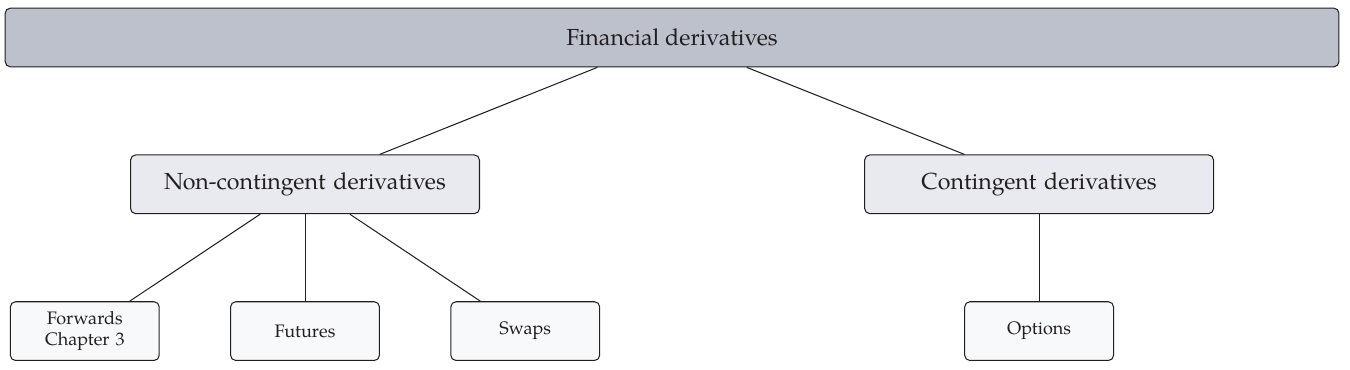
Schematic overviews
Overview diagrams show how a topic divides into categories.
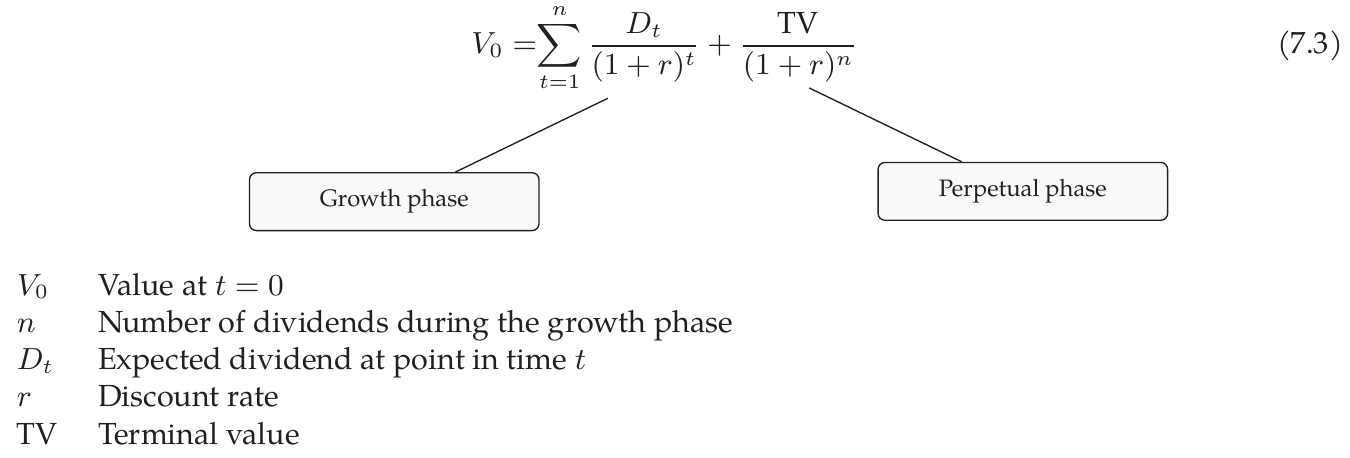
Annotated formulas
Each formula comes with a table of its notation. Symbols need not be looked up elsewhere.
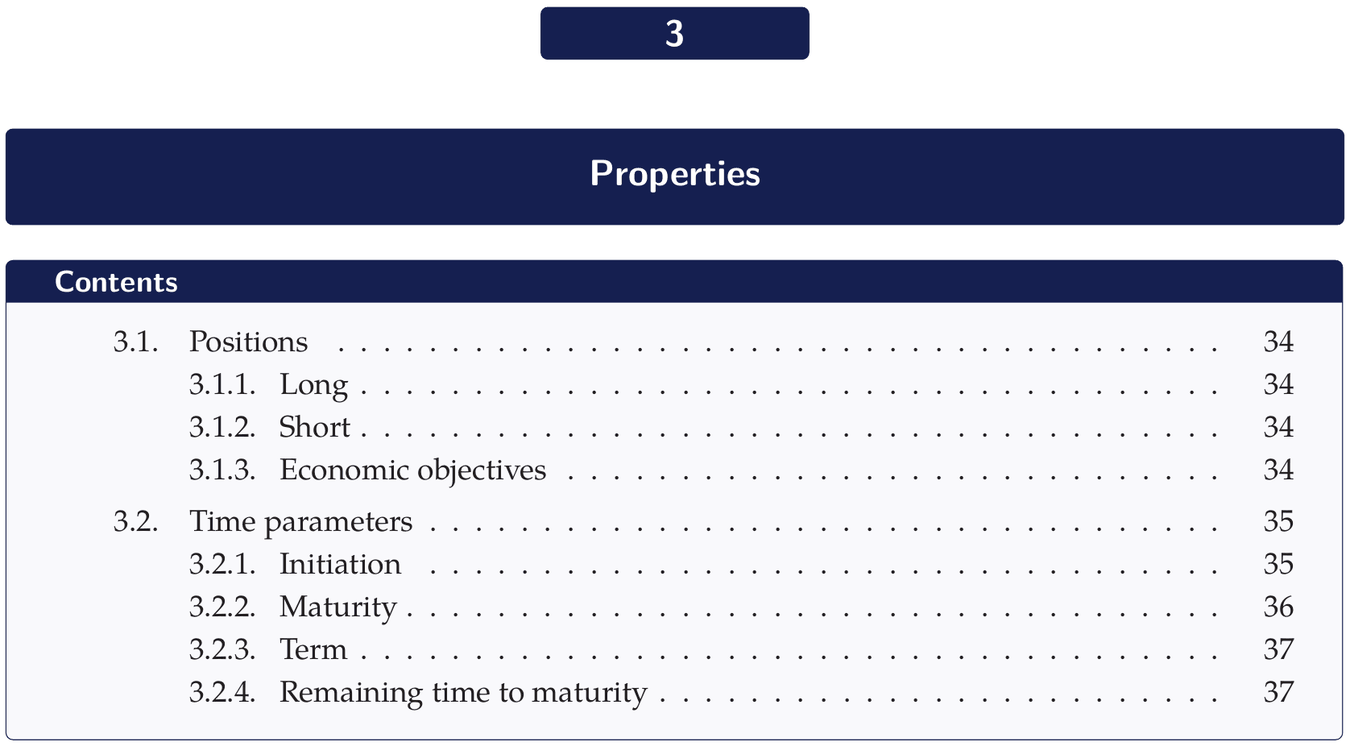
Outlined chapters
Each chapter opens with its table of contents, which lists the sections covered.
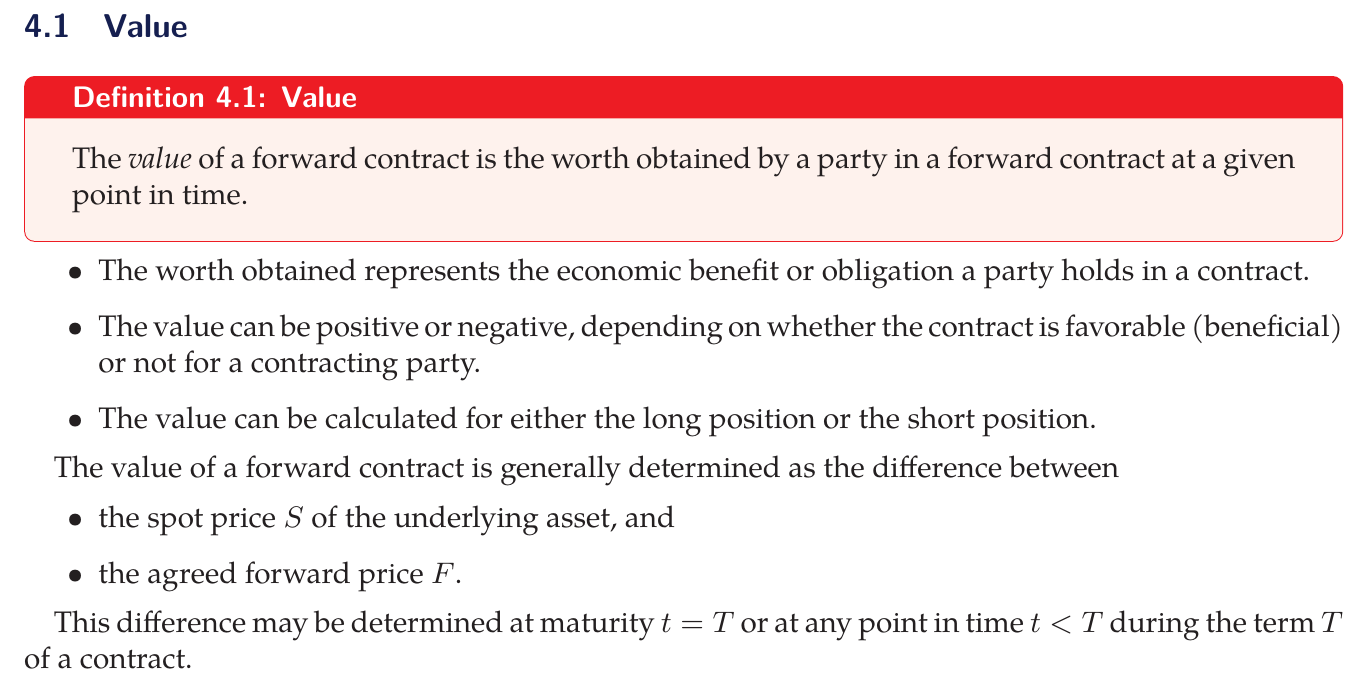
Clear definitions
Terms are defined and a list of definitions gives an overview.

Concise explanations
Each definition is followed by an explanation in short sentences. Bullet points and symbols set out the idea point by point.
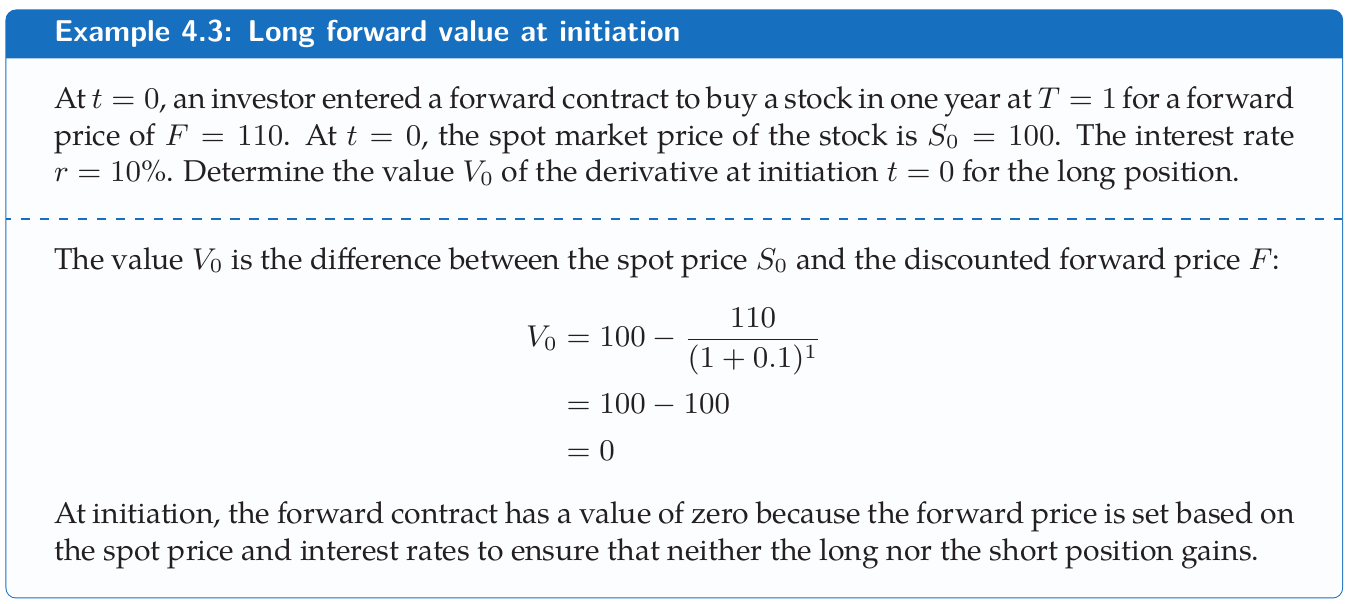
Simplified examples
Concepts are illustrated with short, simplified examples. Each example poses a question and works out the answer step by step, with a focus on the method. Amounts, rates and dates are chosen to keep each calculation simple.
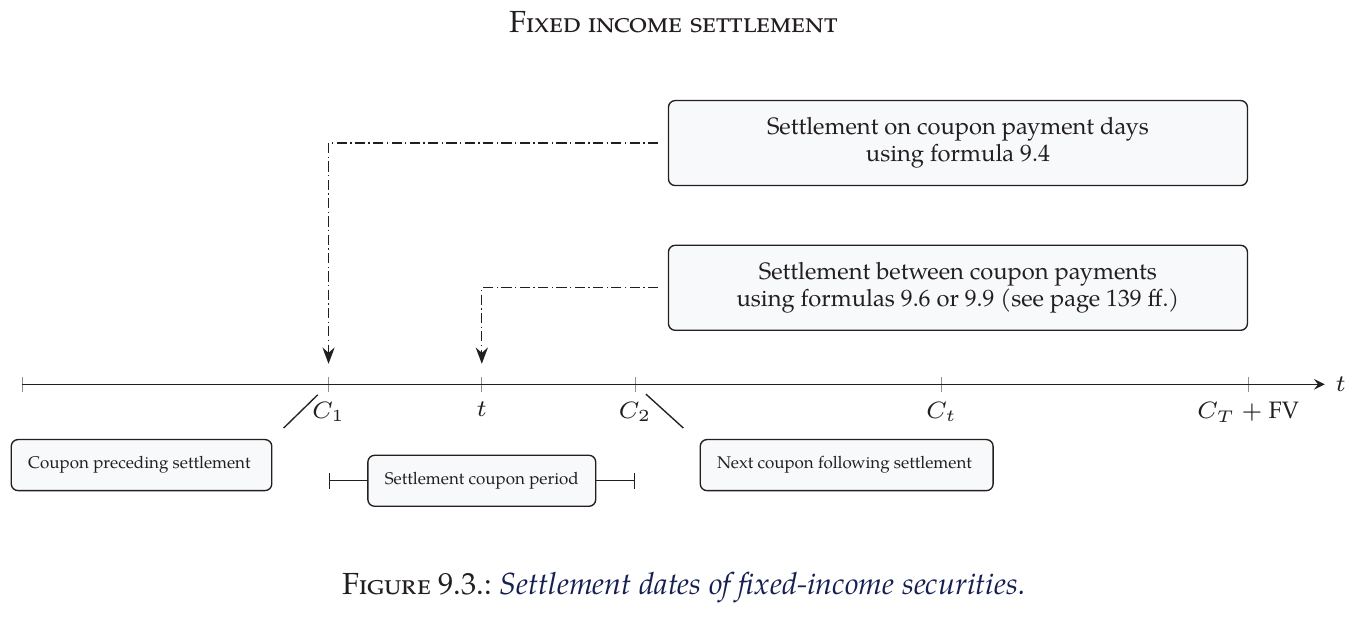
Visualized abstract concepts
Overview diagrams and annotated timelines show structure and sequence. Annotations name the relevant steps.
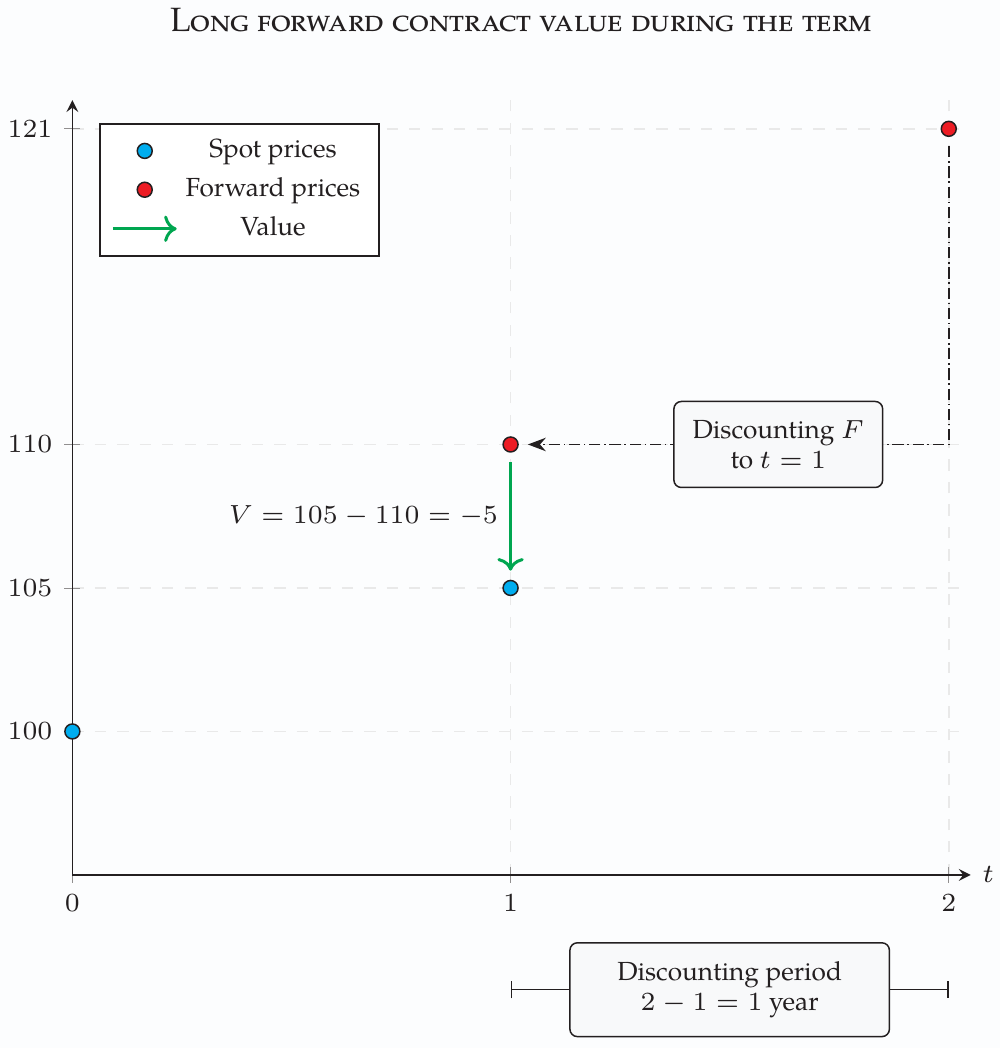
Labeled plots
Plots accompany the mathematical calculations and show the results.
Consistent design and typography
The book uses the same styles and the same color system in every chapter. Each type of element has its own color.
Reviews
Selected reviews from Amazon.com, Amazon.ca and Amazon.de:
This book is an excellent and thorough introduction to the world of OTC (Over-The-Counter) Forward Contracts.
The textbook is easy to read with great examples.
This is an introductory textbook on financial derivatives, well-suited for undergraduate students.
The book is very well structured, the language is clear and the text does not overwhelm the novice with jargon and notation.
Details
- Title
- Financial Derivatives
- Subtitle
- Basic Principles of Pricing and Valuation – Forward Contracts –
- Author
- Matthias Scholz
- Language
- English
- Published
- 13 October 2025
- Pages
- 253 (including front matter)
- Hardcover
- ISBN 978-1-0696434-1-4
- Paperback
- ISBN 978-1-0696434-0-7